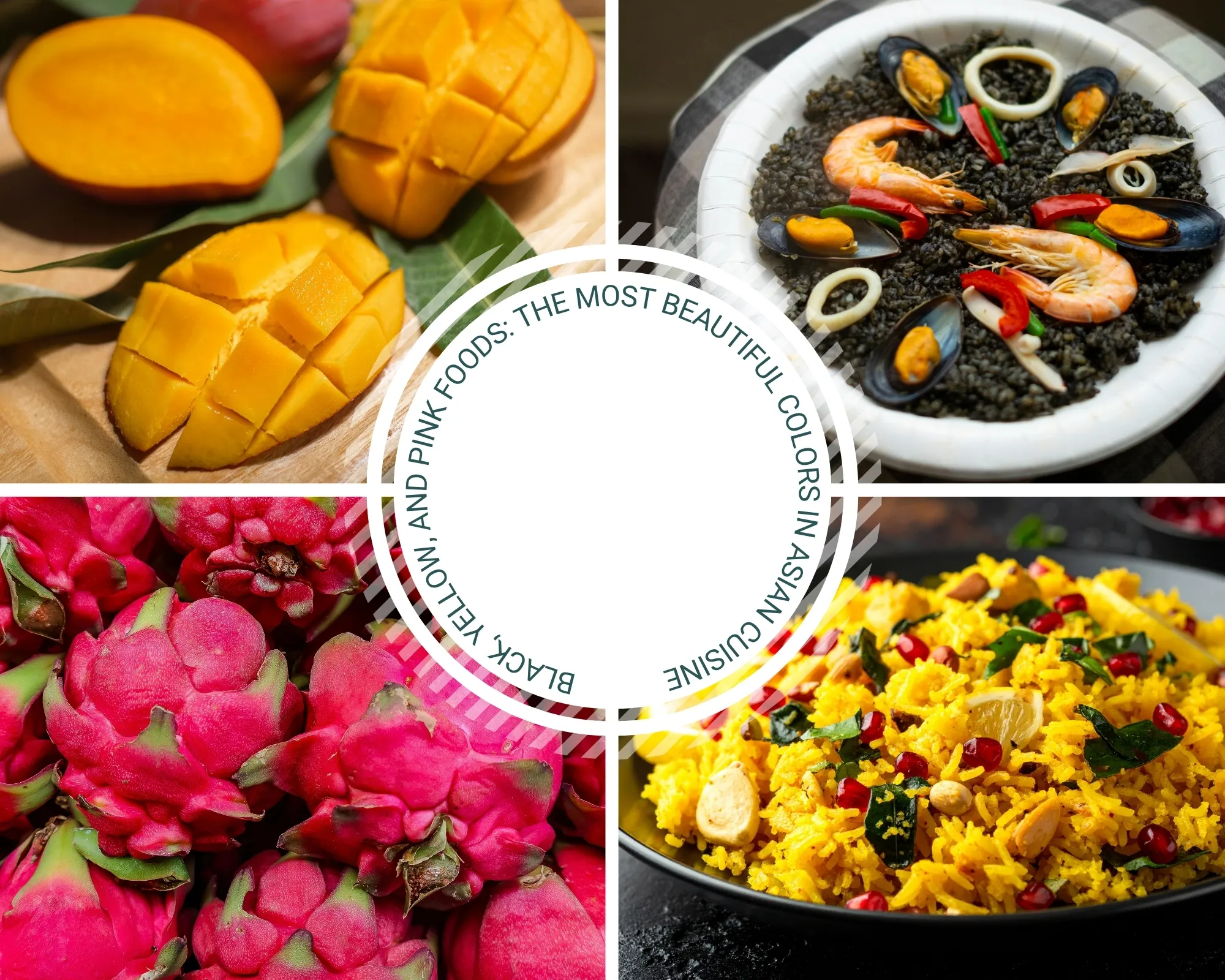
For centuries, black foods were reserved for emperors. Now science proves why. What are natural black foods in Asian cuisine? From forbidden rice to black garlic — health benefits and where to eat them in Asia. Are you looking to add some excitement and variety to your meals? Well, forget about the usual green and brown foods because today, we’re diving into the world of black, yellow, and pink food! Yes, you heard that right – there are some truly unique and vibrant colored foods out there waiting to be discovered.
While we’re all familiar with the typical food colors, black, yellow, and pink may not be the first shades that come to mind. However, these colors can add a new visual appeal and flavor to your dishes. Whether you’re a foodie looking to experiment with different ingredients or add fun to your plate, exploring the world of black, yellow, and pink food will surely excite your kitchen.
This article will examine some of the most intriguing and delicious black, yellow, and pink foods. From exotic fruits and vegetables to unique spices and ingredients, we’ll explore the options available to spice up your meals. Prepare to embark on a colorful culinary adventure that will tantalize your taste buds and add a vibrant twist to your dining experience.
⚫ Natural black foods in Asian cuisine: 7 Powerful Dishes
From forbidden rice to squid ink — these natural black foods in Asian cuisine deliver antioxidants, minerals, and unforgettable flavor.
Black (Forbidden) Rice
Once reserved for Chinese emperors. Nutty, slightly sweet, and packed with anthocyanins — the same antioxidants found in blueberries.
Squid Ink Pasta & Rice
A Japanese and Italian favorite. The ink adds a briny, umami depth and striking black color. Rich in iron and antioxidants.
Black Sesame
Toasted and ground into desserts, sauces, and ice cream. Lignans and healthy fats support liver health and lower blood pressure. Black sesame is a staple in Japanese cuisine, where it appears in everything from ice cream to salad dressings.
Black Garlic
Aged regular garlic until black and sweet. No sharp bite. Double the antioxidants of raw garlic, plus S-allylcysteine.
Fermented Black Beans
A staple in Chinese cooking (mapo tofu). Salty, funky, and packed with protein and probiotics from fermentation.
Thai Black Sticky Rice
A sweet dessert rice served with coconut milk and mango. Chewy, nutty, and rich in fiber and anthocyanins.
Black Chia Seeds
Used in puddings, drinks, and overnight oats. Omega-3s, fiber, and calcium in every tiny seed. For more on how to incorporate chia seeds into your daily diet, check out our full guide.
🎨 Natural Food Colors Table 🌏
| 🎨 Color | 🌿 Natural Source | 💚 Health Benefit | 🍜 Asian Dish Example |
|---|---|---|---|
|
Black
|
Black rice, black sesame, squid ink |
Anthocyanins (antioxidants)
❤️ Heart health
|
🍚 Thai black sticky rice |
|
Yellow
|
Turmeric, saffron, mango |
Curcumin (anti-inflammatory)
🛡️ Immune support
|
🟡 Indian turmeric rice |
|
Pink
|
Dragon fruit, beetroot, sakura |
Lycopene, fiber
🌸 Skin health
|
🌸 Japanese sakura mochi |
|
Purple
|
Butterfly pea flower |
Anthocyanins
🧠 Brain health
|
💜 Thai blue rice |
|
Red
|
Red yeast rice, goji berries |
Heart health, monacolin K
❤️ Cholesterol support
|
🍖 Chinese red braised pork |
Save this color guide for your next meal prep – tap to pin 📌
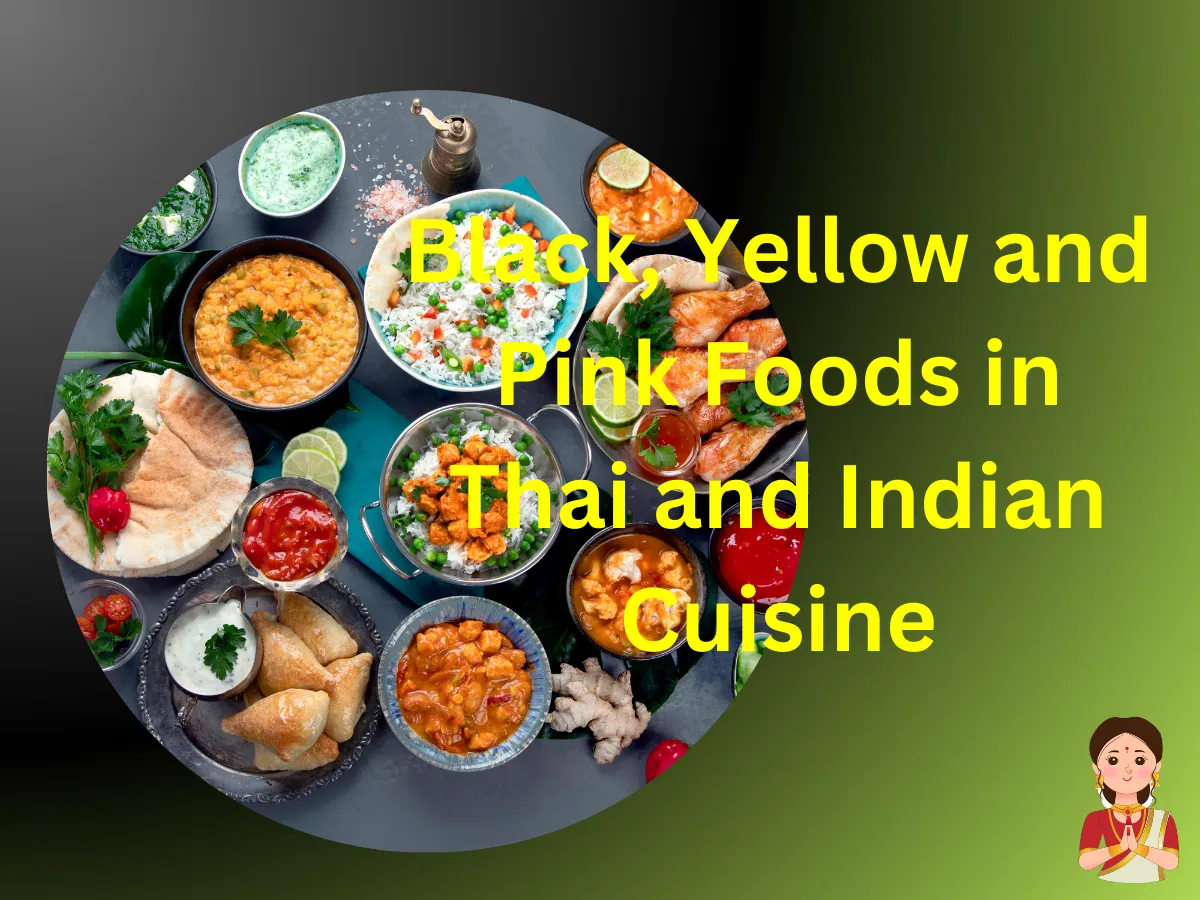
The Colors of Thai Cuisine
| Food Color | Iconic Examples | Significance & Benefits |
|---|---|---|
| Black | Black Sticky Rice (Khao Niew Dam) Squid Ink Noodles |
Rich in antioxidants and fiber; supports heart health. Adds a deep, nutty flavor and sea-derived minerals. Beyond black rice and black sesame, the ocean offers another category of natural dark foods: seaweed and algae. These marine plants are packed with iodine, omega-3s, and antioxidants. |
| Yellow | Yellow Curry (Gaeng Kari) Turmeric Fried Rice |
Driven by Turmeric; known for anti-inflammatory properties. Offers a milder, comforting flavor profile. |
| Pink | Yum Woon Sen (Shrimp) Sakura Shrimp Paste Rice |
High-quality protein and Omega-3s. Provides a vibrant aesthetic and a balance of sweetness and heat. |
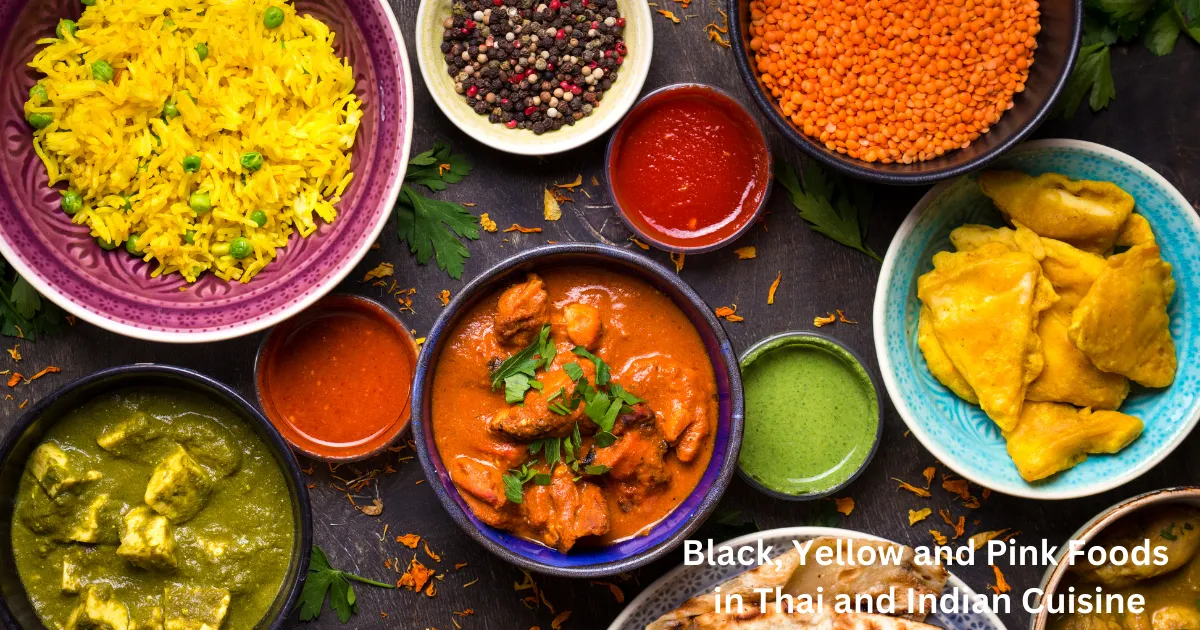
The Colors of Indian Cuisine
| Cuisine Color | Traditional Dishes | Cultural & Health Impact |
|---|---|---|
| Black | Dal Makhani (Black Lentils) Chak Hao (Manipur Black Rice) | Rich in anthocyanins and protein. Often used in slow-cooked "comfort" foods and ceremonial puddings. |
| Yellow | Haldi Ka Chawal (Turmeric Rice) Toor Dal (Yellow Lentils) | The "Gold of India." Turmeric is central to Ayurvedic medicine for its anti-inflammatory properties. |
| Pink | Beetroot Halwa Noon Chai (Kashmiri Pink Tea) | High in folate and manganese. Pink foods like Noon Chai offer warming effects essential for colder climates. |
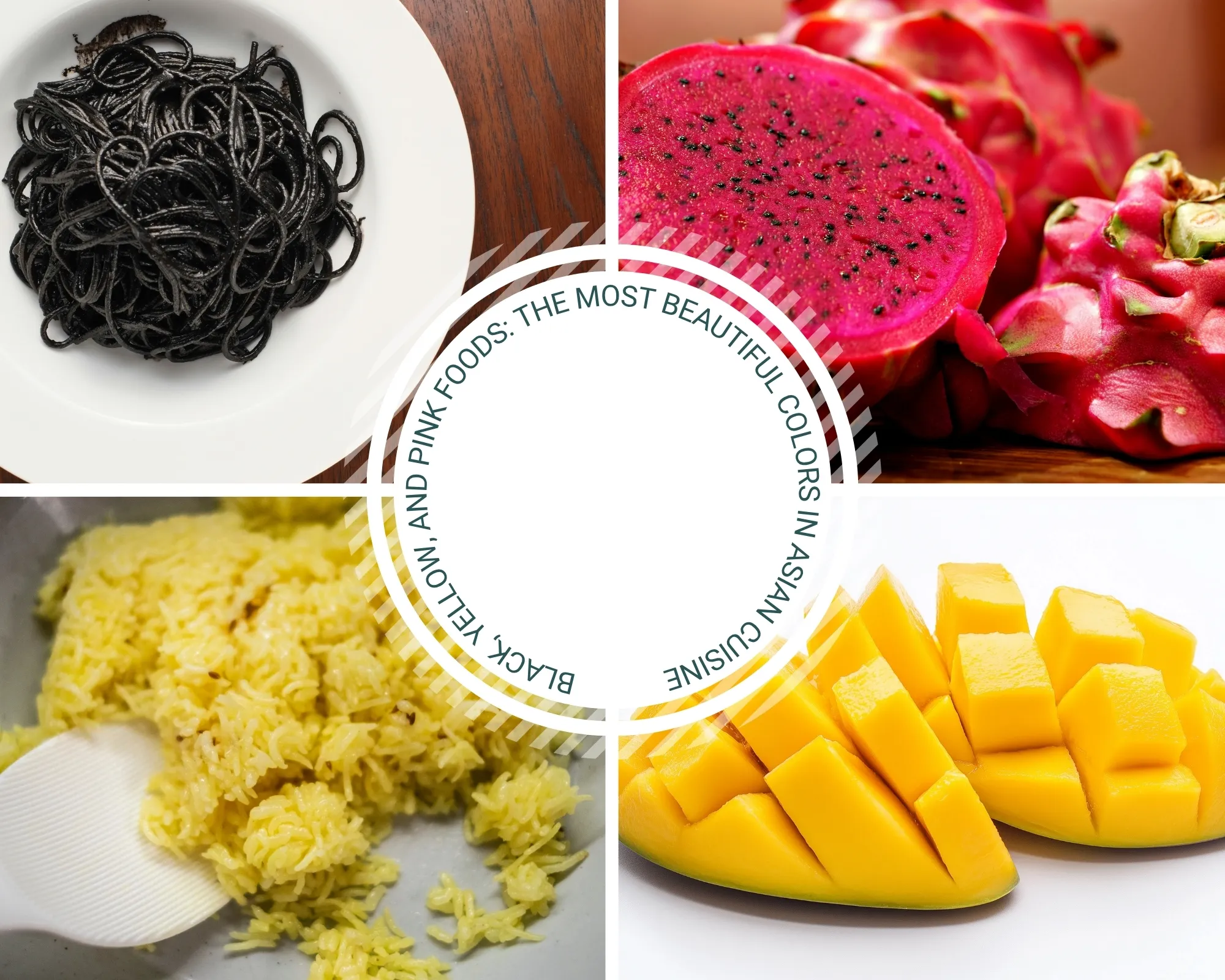
Asian Color Palette
| Color Palette | Ingredients & Recipes | Health & Wellness Essence |
|---|---|---|
| Black |
Black Soybeans (Jajangmyeon), Black Sugar, Chia Seeds
Retains molasses for caramel sweetness; used in hearty traditional noodles. |
High in Anthocyanins; supports heart health and improves night vision.
|
| Yellow |
Yellow Tomatoes, Split Peas (Dal), Yellow Watermelon & Kiwi
Zesty Thai salads, creamy textures, and refreshing summer fruit platters. |
Excellent source of Vitamins A & C; provides a powerful immune boost.
|
| Pink |
Pink Dragon Fruit, Grapefruit "Pink Drink", Pink Onions
Stunning smoothie bowls and metabolism-boosting wellness blends. |
Rich in Lycopene; combats oxidative stress and aids in weight management.
|
🌱 Explore More Natural Foods
Hungry for more? Check out these related guides:
- 🇯🇵 Japanese Cuisine – explore black sesame, matcha, and more
- 🌱 Chia Seeds for Weight Loss – tiny seeds, big benefits
- 🌊 Blue Food Benefits – discover seaweed, algae, and ocean-based superfoods
🎨 Black, Yellow, or Pink — Which One?
Each color offers unique health benefits. Which one fits your meal today?
👇 Comment your vote – and join our Colorful Kitchen community!
❓ Frequently Asked Questions About Black Foods in Asian Cuisine
What are natural black foods in Asian cuisine?
Is black rice healthier than brown rice?
What does squid ink taste like?
Where can I eat black foods in Asia?
🎨 Conclusion: Eat the Rainbow — The Asian Way
Black, yellow, and pink aren’t just colors on a palette. In Asian cuisine, they’re promises of flavor, health, and cultural meaning. Natural black foods in Asian cuisine — like forbidden rice, black sesame, and squid ink — deliver anthocyanins and antioxidants that fight inflammation and support heart health. Yellow foods (turmeric, saffron, mango) bring anti-inflammatory power and immune support. Pink foods, from dragon fruit to sakura, offer lycopene and visual joy.
What makes these colorful ingredients special is that they’re natural. As the Asia-Pacific food color market shifts toward plant-based, clean-label options, traditional ingredients like turmeric, beetroot, and butterfly pea flower are replacing synthetic dyes. That’s good for your body and good for your plate. And when you explore natural black foods in Asian cuisine, you’re not just eating — you’re participating in a centuries-old tradition of cooking with whole, unprocessed ingredients.
Whether you’re cooking at home, eating at a Thai street stall, or visiting a sakura cafe in Tokyo, these vibrant foods prove one thing: healthy eating doesn’t have to be boring. So go ahead — add some black rice to your bowl. Stir turmeric into your soup. Slice a pink dragon fruit for dessert. And remember: natural black foods in Asian cuisine are waiting to transform your next meal into something beautiful, nourishing, and unforgettable.
Join the Conversation