
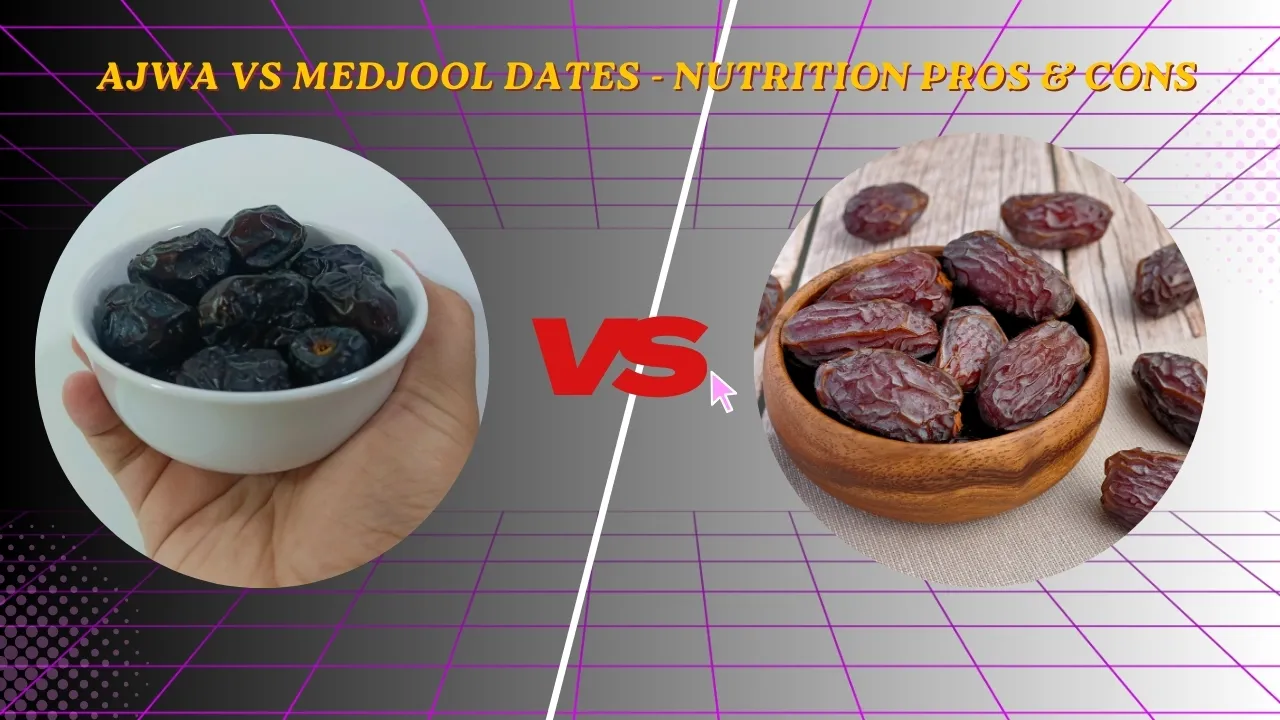
When choosing the perfect natural fuel, the Medjool dates vs Ajwa dates for diabetes. debate often comes down to your specific health goals. While both varieties are nutritional powerhouses, understanding the unique profiles of Medjool vs. Ajwa dates is key to unlocking benefits such as immediate energy, relief from constipation, and even support for natural anemia.
Whether you are looking for the syrupy sweetness of a desert staple or the ancient medicinal properties of a superfood, our deep dive into Medjool vs Ajwa dates reveals which mineral-rich fruit—packed with potassium and magnesium—belongs in your daily diet.
Sweet but Smart: The Nutritional Benefits of 7 Types of Dates

Medjool Dates: Nutrition Pros & Cons
| The Benefits (Pros) | The Cautions (Cons) |
|---|---|
|
|
The Deep Dive: Nutrition & Glycemic Index (GI)
| Type | Nutrition Focus | Best For | Stats (Per 100g) |
|---|---|---|---|
| Medjool | High in natural sugars, fiber, and potassium. | ⚡ Energy & Digestion |
GI: 55 (Medium)
Cals: 277 kcal
Magnesium: 54mg
|
| Deglet Noor | Moderate sweetness with lower sugar content. | 🥧 Baking & Snacking |
GI: 42 (Low)
Cals: 282 kcal
Fiber: 8g
|
| Ajwa | Elite mineral profile: Magnesium, Calcium, Potassium. | 🦴 Bone Health |
GI: 35-40 (Lowest)
Cals: 277 kcal
Magnesium: 58mg
|
| Zahidi | High dietary fiber and lower sugar ratio. | 🥗 Blood Sugar Control |
GI: 46 (Low)
Cals: 276 kcal
Fiber: 7.5g
|
| Barhi | Antioxidant powerhouse (especially when fresh). | 🍯 Fresh Eating |
GI: 50 (Med)
Cals: 305 kcal
Vitamin C: 0.3mg
|
⏱️ The 60-Second Date Selection Guide
When comparing Medjool vs Ajwa dates, your choice depends on your specific wellness needs:
(High Glucose Fuel)
(Lowest GI Index)
(High Fiber Content)
(Subtle Sweetness)
🏃 Athlete's Corner: Match Your Workout
High-Intensity Activity? Choose Medjool. Marathon Runner? Choose Ajwa.
Quick glucose for explosive power. Eat 2 dates 15–30 min pre-workout.
Slow-release energy + anti-inflammatory recovery. No sugar crash.
💡 Pro Tip: Use Medjool before your workout for fuel, and Ajwa after for recovery and inflammation reduction.
🦴 For Seniors & Bone Health
Ajwa dates are a nutritional powerhouse for aging bodies. Their exceptional mineral profile — Magnesium (58mg), Calcium, and Potassium — directly supports bone density, helping to fight osteoporosis and maintain skeletal strength.
✅ Senior's Tip: Enjoy 2–3 Ajwa dates daily with a glass of milk or yogurt for a calcium-boosting, bone-strengthening snack.
⚖️ For Calorie-Conscious Eaters
Zahidi dates are the smart choice for weight management. With the highest fiber content (7.5g per 100g) and a lower sugar ratio, they keep you full longer and curb cravings without excess calories.
✅ Weight-Loss Tip: Replace sugary snacks with 2 Zahidi dates + a handful of almonds for a satisfying, metabolism-friendly treat.
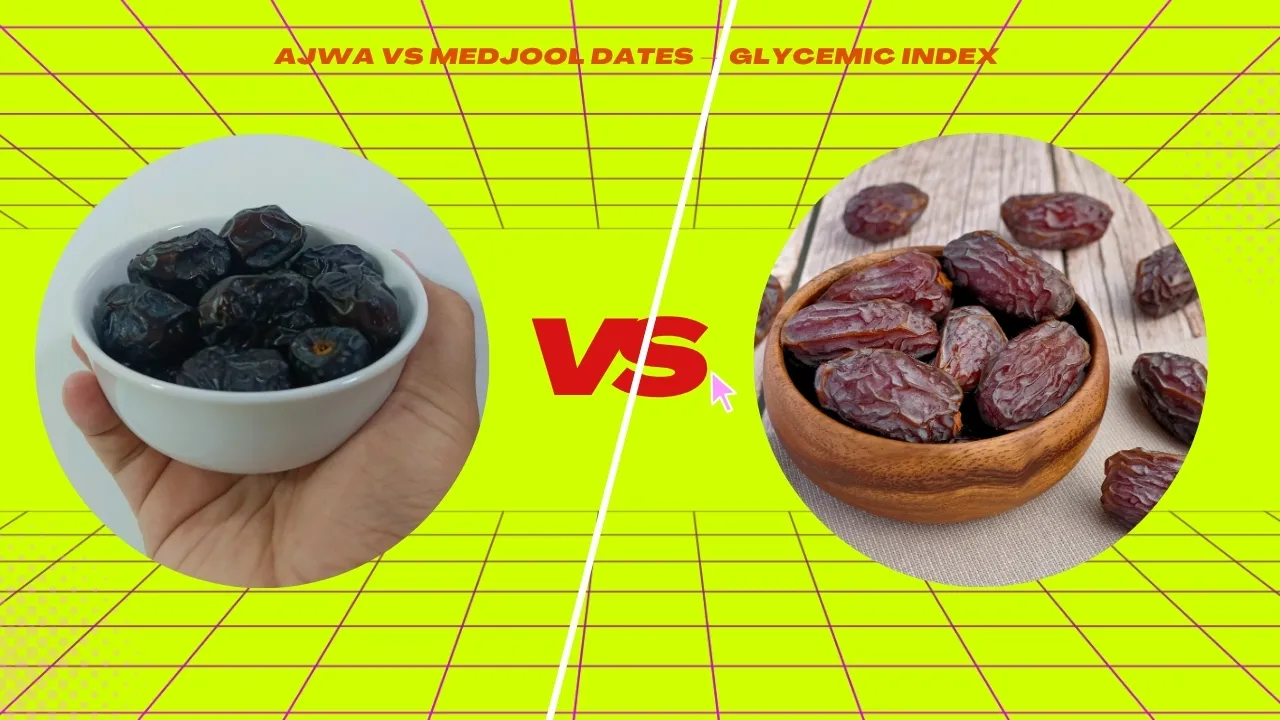
Medjool vs. Ajwa Dates: Which Fuels Your Sport?
For an athlete, choosing between Medjool vs Ajwa dates isn't just about nutrition—it’s about biochemical timing. In the world of sports nutrition, the Glycemic Index (GI) determines whether a food acts as "rocket fuel" or "sustained endurance."
Here is a specialized breakdown of Medjool vs Ajwa dates based on activity type, intensity, and mineral needs.
The Athlete's Comparison: Medjool vs. Ajwa
| Feature | Medjool (Rocket Fuel) | Ajwa (Steady Burner) |
|---|---|---|
| Glycemic Index (GI) | ~55 (Medium) | ~35-40 (Low) |
| Primary Sugar | High Glucose & Fructose | Higher Complex Minerals |
| Potassium | High (~696mg) | Moderate (~510mg) |
| Intensity | Sprints / HIIT / Power | Endurance / Zone 2 |
| Best Benefit | Glycogen Replenishment | Anti-Inflammatory Recovery |
High-Intensity Activity (HIIT, Sprinting, Heavy Lifting)
Winner: Medjool. When performing at 80-90% of your max heart rate, your body needs glucose immediately to prevent hitting "the wall."
- Why: In the battle of Medjool vs Ajwa dates for speed, Medjools win due to their higher GI, providing the quick ATP needed for explosive movements.
- Pro Tip: Consume 2 Medjool dates 15–30 minutes before a workout for a natural energy spike.
Moderate-Intensity & Endurance (Cycling, Long Distance Running)
Winner: Ajwa. For steady-state cardio (Zone 2) lasting over 90 minutes, you want to avoid "glucose spikes and crashes."
- Why: Ajwa dates release energy slowly, helping you maintain a stable pace without the sugar crash.
- The Mineral Edge: They are exceptionally high in Magnesium and Calcium, vital for preventing micro-cramps.
Post-Workout Recovery
Winner: Both (Combo Strategy)
- Medjool for Glycogen: Perfectly replaces depleted glycogen stores after grueling sessions.
- Ajwa for Inflammation: High phenolic content (antioxidants) helps reduce muscle soreness the next day.
🏆 The Expert Verdict
Use Medjool if: You are a cross-fitter, sprinter, or bodybuilder needing immediate power.
Use Ajwa if: You are a marathoner, cyclist, or yogi looking for sustained stamina and recovery.
🥘 Culinary FAQ: Cooking with Dates
1. Can I substitute Medjool dates for Deglet Noor in baking? Yes, but with adjustments. Medjool dates are moisture-rich and soft, making them ideal for “raw” brownies or energy balls. Deglet Noor dates are firmer and hold their shape better in breads or muffins. If using Deglet Noor in a recipe calling for Medjool, soak them in warm water for 10 minutes first to replicate that “jammy” texture.
2. How do I stop dates from sticking to my knife when chopping? Dates are high in natural invert sugars, which makes them incredibly sticky. To get clean pieces for salads or tagines, lightly coat the knife blade with a neutral oil or dip the knife in hot water between slices.
3. What is the best way to pit an Ajwa date without crushing it? Because Ajwa dates have a drier, meatier texture, they can be brittle. Instead of squeezing them, use a small paring knife to make a shallow lengthwise slit. The pit should pop out easily, leaving the fruit’s “skin” intact for stuffing with nuts or goat cheese.
4. How long can I store dates in the pantry versus the fridge? Dates are “nature’s dried fruit,” but they still have moisture.
- Pantry: 1–3 months (Keep in an airtight glass jar to prevent drying).
- Fridge: 6–12 months (Best for maintaining the honey-like flavor of Medjools).
- Freezer: Up to 2 years (They don’t actually freeze solid due to the sugar content!).
Natural Sweetener Masterclass: Q&A
What are the best low glycemic sweeteners for baking?
Medjool dates vs Ajwa dates for diabetes: Which is safer?
What are the best low glycemic sweeteners for blood sugar control?
Are dates a safe sugar substitute for diabetics?
What are the lowest glycemic index dates for keto-friendly baking?
Ajwa Dates vs. Honey: Which is the better natural sweetener?
Why are fiber-rich natural sweeteners better for gut health?
Dates vs. Stevia: Which natural sweetener is best?
What is the nutritional profile of dates as a whole food sweetener?













April 24, 2026 at 2:32 pmI’ve found that a brisk 30-minute walk in the morning feels completely different when I have a Medjool date beforehand. They provide that perfect burst of natural glucose without the processed sugar crash