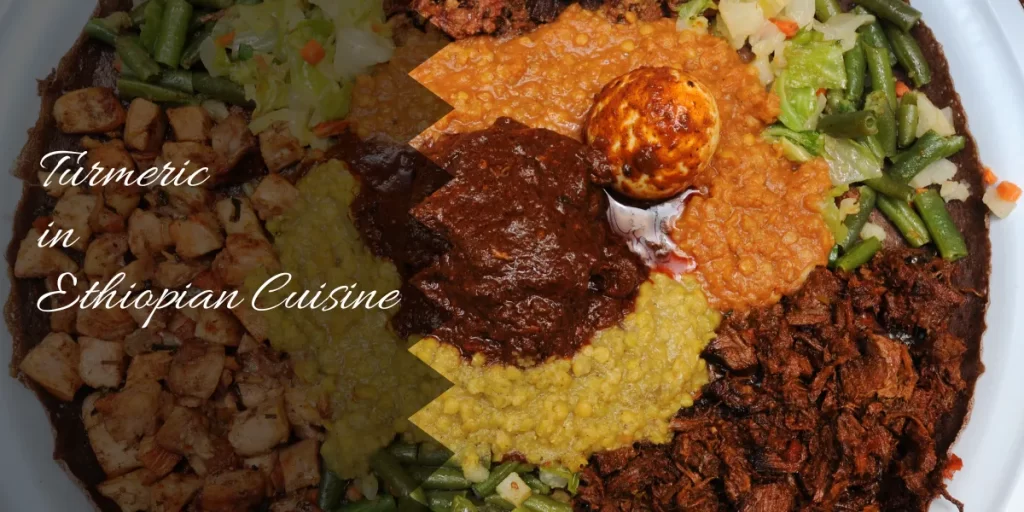
Turmeric in Ethiopian Cuisine: Ethiopian cuisine is renowned for its unique flavor combinations, often created by combining cumin, coriander, and turmeric. Turmeric, the vibrant golden spice, has been cherished for centuries for its health benefits and culinary uses.
Turmeric in Ethiopian cuisine is far more than a simple seasoning—it’s a cornerstone of flavor, color, and tradition. Derived from the root of the Curcuma longa plant (a member of the ginger family), this golden spice is known locally as “kaha” and appears across a wide range of traditional dishes.
One of the most beloved turmeric dishes in Ethiopian cuisine is doro wat, a spicy chicken stew. Here, turmeric not only gives the chicken its signature rich yellow hue but also infuses the dish with a slightly bitter, earthy depth that balances the heat of berbere. Beyond this iconic dish, turmeric is equally essential in lentil stews (misir wat), vegetable dishes, and sauces.
Beyond the kitchen, turmeric in Ethiopian cuisine carries a legacy of wellness. For centuries, it has been valued in traditional Ethiopian medicine for its potential health benefits, thanks to curcumin—a compound known for its anti-inflammatory and antioxidant properties. In Ethiopian culture, turmeric is often used to soothe digestive discomfort and support overall well-being.
From its vibrant color to its earthy flavor and time-honored healing uses, turmeric in Ethiopian cuisine remains a truly indispensable ingredient. Its unique taste and versatility make it a staple in kitchens across Ethiopia and beyond.
Aside from its culinary uses, turmeric has been used for centuries in traditional Ethiopian medicine for its potential health benefits. It contains a compound called curcumin, known for its anti-inflammatory and antioxidant properties. In Ethiopian culture, turmeric is often used to alleviate digestive issues and promote well-being.
The Ethiopian Spice Trio: Cumin · Coriander · Turmeric
The magic behind Ethiopia's bold, aromatic dishes — flavor profiles, culinary uses, and health benefits
In Ethiopian cuisine, cumin, coriander, and turmeric form a powerful trio that creates the foundation of countless dishes. Used together, they produce a unique, complex, and delicious flavor profile that transforms simple stews, lentil dishes, and vegetable preparations into unforgettable culinary experiences.
Cumin
👃 Flavor Profile
🍲 Culinary Uses
- 🥩 Seasoning meats and stews
- 🥕 Vegetable dishes
- 🍛 Adds depth to sauces
- ✨ Often combined with coriander and turmeric
💚 Health Benefits
- 🔩 Good source of iron — supports immune system & prevents anemia
- 🛡️ Rich in antioxidants — reduces inflammation
Coriander
👃 Flavor Profile
🍲 Culinary Uses
- 🥗 Seasoning salads and soups
- 🍲 Flavoring stews
- ✨ Pairs perfectly with cumin and turmeric
💚 Health Benefits
- 🌾 Good source of dietary fiber — reduces cholesterol & improves digestion
- 🛡️ Rich in antioxidants — protects against diseases
Turmeric
👃 Flavor Profile
🍲 Culinary Uses
- 🍗 Doro wat (spicy chicken stew) — adds rich yellow color
- 🥘 Lentil stews and vegetable dishes
- ✨ Essential in the cumin-coriander-turmeric trio
💚 Health Benefits
- ⚕️ Contains curcumin — powerful anti-inflammatory & antioxidant
- 🛡️ Helps reduce inflammation & protect against diseases
| Spice | Flavor Profile | Culinary Uses | Key Health Benefits |
|---|---|---|---|
| 🌾 Cumin | Warm, earthy, robust & nutty with a slight bitterness | Meats, vegetables, stews; adds depth to sauces | Iron (immune support) + antioxidants (anti-inflammatory) |
| 🌿 Coriander | Mild, sweet, slightly citrusy | Salads, soups, stews; brings a hint of sweetness | Dietary fiber (cholesterol & digestion) + antioxidants |
| 🟡 Turmeric | Warm, earthy, slightly bitter; vibrant golden color | Doro wat, lentil stews, vegetable dishes; key in spice trio | Curcumin (powerful anti-inflammatory & antioxidant) |
Turmeric at a Glance
The Golden Spice of Ethiopia
🔬 Scientific Name
🍲 Flavor Profile
🥘 Key Dishes
• Misir Wat (red lentil stew)
• Vegetable alicha (mild turmeric stew)
• Kik Alicha (split pea stew)
💚 Health Benefits
Turmeric in Ethiopian Cuisine
Turmeric in Ethiopian cuisine is far more than a simple seasoning—it's a cornerstone of flavor, color, and tradition. Derived from the root of the Curcuma longa plant (a member of the ginger family), this golden spice is known locally as "kaha" and appears across a wide range of traditional dishes.
One of the most beloved examples of turmeric in Ethiopian cuisine is doro wat, a spicy chicken stew. Here, turmeric not only gives the chicken its signature rich yellow hue but also infuses the dish with a slightly bitter, earthy depth that balances the heat of berbere.
Beyond the kitchen, turmeric in Ethiopian cuisine carries a legacy of wellness. For centuries, it has been valued in traditional Ethiopian medicine for its potential health benefits, thanks to curcumin—a compound known for its anti-inflammatory and antioxidant properties.