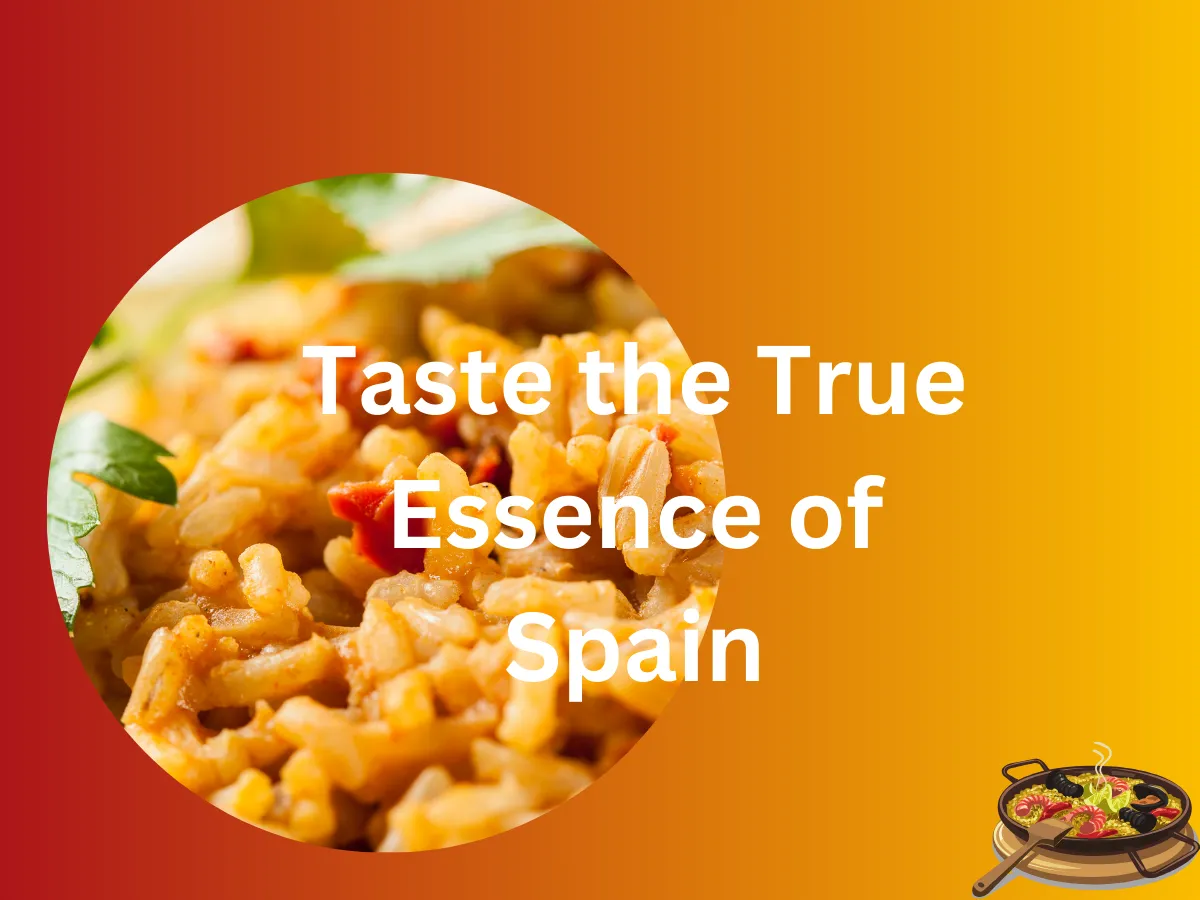
Saffron, smoked paprika, and the crackle of socarrat — Spanish rice is a sensory journey. But did you know basmati rice is finding its way into paella? When we think of traditional Spanish cuisine, dishes like paella and tapas often come to mind, typically highlighting local ingredients such as saffron, seafood, and charcuterie. However, a surprisingly versatile player is making its mark in the Spanish culinary scene: basmati rice, known for its unique fragrance and texture.
This aromatic rice has been chiefly associated with Indian and Middle Eastern dishes. Yet, its ability to absorb flavors makes it an excellent candidate for the rich and diverse palate of Spanish cooking. As culinary boundaries continue to blur in our increasingly globalized world, basmati rice is an unexpected ingredient that can enhance classic Spanish recipes.
In this article, we will explore the surprising role of basmati rice within Spanish cuisine and examine its applications in traditional dishes. By the end, you’ll gain insight into how this humble grain can redefine your experience of Spanish food, opening the door to new culinary possibilities.
What Is Spanish Rice? A Cultural Overview
Spanish rice, locally known as Arroz a la Banda or part of the iconic Paella, originated in Valencia. Its roots trace back to the Moorish introduction of rice cultivation to the Iberian Peninsula. Unlike “Mexican rice,” authentic Spanish versions prioritize saffron for a golden hue rather than tomato bases.
Culturally, rice is the heart of Spanish hospitality. It defines Sunday family gatherings and vibrant festivals like Las Fallas. Sharing a large, shallow pan of slow-cooked rice fosters communal bonds, symbolizing regional pride and the Mediterranean tradition of slow, soulful dining.
Rice Variety Comparison Table
| Rice Variety | Grain Length | Best For | Texture |
|---|---|---|---|
| Bomba | Short | Traditional paella | Creamy, firm, absorbs 3x liquid |
| Calasparra | Short | Paella, arroz caldoso | Similar to Bomba, slightly less absorbent |
| Basmati | Long | Fusion paella, lighter dishes | Fluffy, separate grains, fragrant |
| Arborio | Short/Medium | Risotto (not traditional for paella) | Creamy, starchy, clumps |
Chef Tips for Perfect Spanish Rice (Every Time)
Achieving authentic Spanish rice requires technique over speed. First, use a wide, shallow pan (paellera); this ensures even heat distribution and allows moisture to evaporate quickly, preventing a mushy texture. Avoid overcrowding the pan with too many ingredients, as this creates steam rather than the desired toasted finish.
Once the liquid is added, the golden rule is: don’t stir after simmering. Stirring releases starch, leading to a creamy risotto-like consistency instead of distinct, firm grains. Finally, let it rest before serving for five minutes. This allows the remaining steam to settle, perfecting the grain’s bite and ensuring the flavors fully develop.
5 Delicious Variations of Spanish Rice
From the shores of Valencia to your kitchen — classic paella and modern twists.
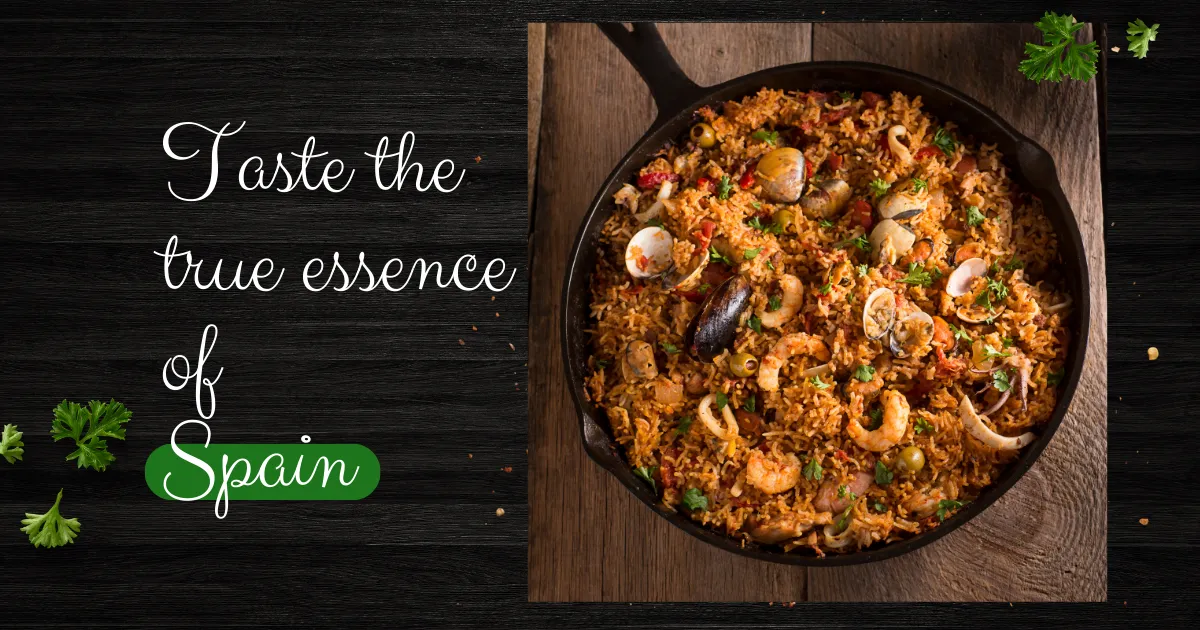
Seafood Paella
A taste of the Mediterranean — loaded with fresh shrimp, mussels, clams, and calamari. The saffron-infused broth creates a golden hue and briny depth.
Shrimp, mussels, squid, Bomba rice, saffron, garlic, sweet paprika.
Vegetarian Paella
A rainbow of seasonal vegetables — artichokes, bell peppers, green beans, and peas. Rich, smoky, and satisfying without meat.
Artichokes, bell peppers, green beans, tomatoes, Bomba rice, smoked paprika.
Mixed Paella
The best of both worlds — tender chicken, savory chorizo, and fresh seafood. A hearty, crowd-pleasing version for meat and seafood lovers alike.
Chicken thighs, shrimp, chorizo, Bomba rice, saffron, rosemary.
Black Paella (Arroz Negro)
Dramatic and delicious — squid ink turns the rice jet black while adding a briny, umami flavor. A showstopper for adventurous cooks.
Squid (or cuttlefish), squid ink, Bomba rice, garlic, alioli (on the side).
Vegan Spanish Rice
100% plant-based, 100% flavor. Nutritional yeast adds cheesy umami, while jackfruit or tofu replaces meat. No one will miss the animal products.
Nutritional yeast, jackfruit or tofu, vegetable broth, bell peppers, peas, smoked paprika.
What to Serve with Spanish Rice
Complete your paella night with perfect pairings — from Spanish wines to classic tapas.
Spanish Wines
🍖 Tempranillo — Meaty paellas (mixed, chorizo)
🐟 Albariño — Seafood paella, black rice
🌸 Rosé — Vegetarian & vegan paella
💡 Pro tip: Serve white wines chilled (45-50°F), reds slightly cool (55-60°F).
Traditional Sauces
🧄 Aioli — Garlic + olive oil emulsion. Creamy, pungent. Perfect with black paella.
🌰 Romesco — Roasted red peppers, almonds, garlic. Smoky, nutty. Ideal for seafood and vegetable paella.
💡 Vegan aioli? Use plant-based mayo + minced garlic.
Classic Tapas
🥔 Patatas Bravas — Crispy potatoes with spicy tomato sauce and alioli. A must-have.
🧄 Gambas al Ajillo — Garlic shrimp sizzling in olive oil with guindilla peppers.
💡 Make it a feast: 2-3 tapas per person + paella.
Fresh Salads
🌿 Mediterranean Salad — Mixed greens, olives, cherry tomatoes, cucumber, red onion, feta, oregano vinaigrette.
🍅 Gazpacho — Chilled tomato-based soup with peppers, cucumber, garlic, and sherry vinegar.
💡 Serve gazpacho in small glasses as a starter.
Spanish Rice vs. Mexican Rice: What's the Difference?
Two beloved rice dishes — same continent, different traditions.
Spanish Rice
(Arroz a la Española / Paella)
Short-grain (Bomba, Calasparra) — absorbs liquid while staying firm.
Saffron (golden color), smoked paprika (pimentón), rosemary.
Wide shallow pan (paellera), never stirred, socarrat (crispy bottom) is prized.
Paella (seafood, meat, mixed), arroz al horno, arroz caldoso.
Mexican Rice
(Arroz a la Mexicana / Red Rice)
Long-grain white rice — stays separate and fluffy.
Tomato (red color), cumin, garlic, onion, sometimes chicken bouillon.
Rice is toasted in oil before adding liquid (tomato broth), then simmered covered.
Side dish for burritos, tacos, enchiladas; base for arroz con pollo.
📋 At a Glance: Spanish vs. Mexican Rice
💡 Can you substitute one for the other? Not directly — the grain and method are too different. But both are delicious in their own right!
🥘 Conclusion: Spanish Rice — Tradition Meets Creativity
Spanish rice is more than a recipe. It’s a socarrat crust, a shared pan, a Sunday with family. For generations, Valencian farmers cooked paella over open fires, using short-grain Bomba rice that could absorb rich broths without turning to mush. That tradition is sacred — but it’s not sealed.
Today, chefs are experimenting with basmati rice in paella, creating lighter, aromatic versions that still honor the soul of Spanish cooking. Purists may raise an eyebrow, but fusion isn’t disrespect — it’s evolution. The key is understanding the rules before you break them.
Whether you stick with Bomba or try basmati, the fundamentals remain: a good sofrito, quality broth, saffron, paprika, and the patience to let the rice cook without stirring. Master those, and you can Spanish-rice anything — seafood, vegetables, chicken, or even vegan chorizo.
So grab a wide pan. Heat your olive oil. Toast your rice. And don’t forget the most important ingredient: the people you share it with.
Share Your Paella Masterpiece
Vote with an emoji. Share your Spanish rice story.
👇 Comment — and join our Global Paella Club.