

Imagine the perfect balance of sweet, sour, salty, and spicy in one bite. That harmony is the secret of Thai cuisine, and it’s achieved through a symphony of essential condiments.
Thai cuisine is renowned for its bold and vibrant flavors, and a key contributor to these flavors is the use of condiments (Thai condiments). These seemingly small additions to dishes play a significant role in elevating taste and providing a unique twist to traditional Thai recipes.
Beyond their flavor-enhancing qualities, Thai condiments also offer surprising health benefits. In this article, we will delve into the secrets of Thai condiments and unveil how they can positively impact your health.
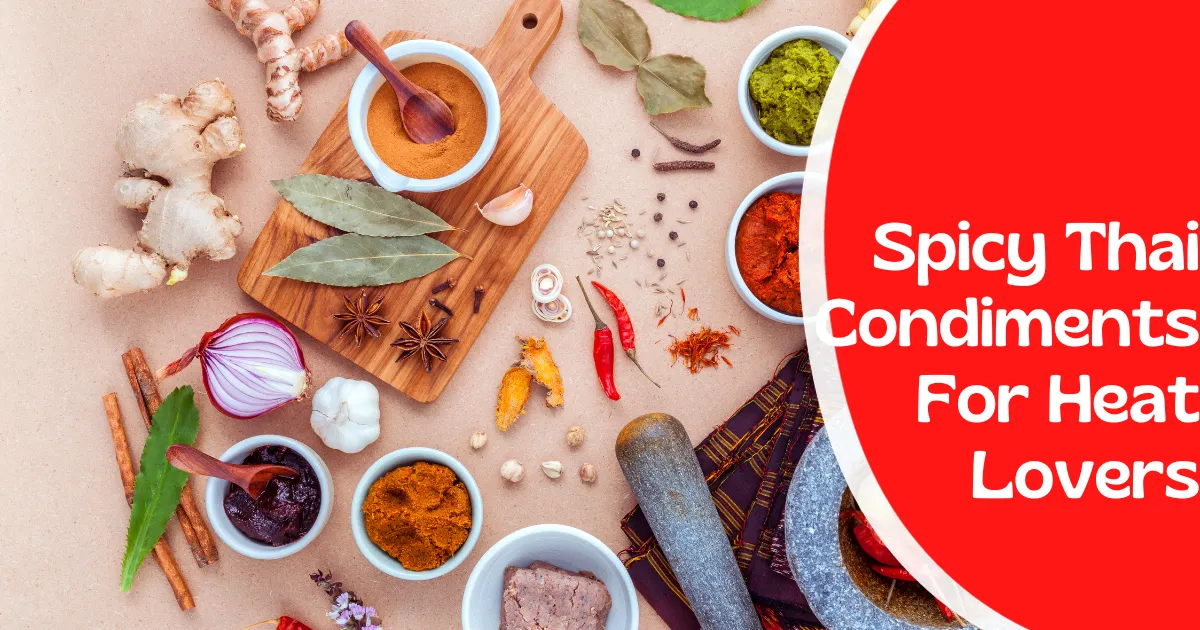
Thai condiments not only add flavor and depth to dishes but also have surprising health benefits. From fish sauce to sweet chili sauce, these condiments are packed with essential nutrients and compounds that can improve overall health.
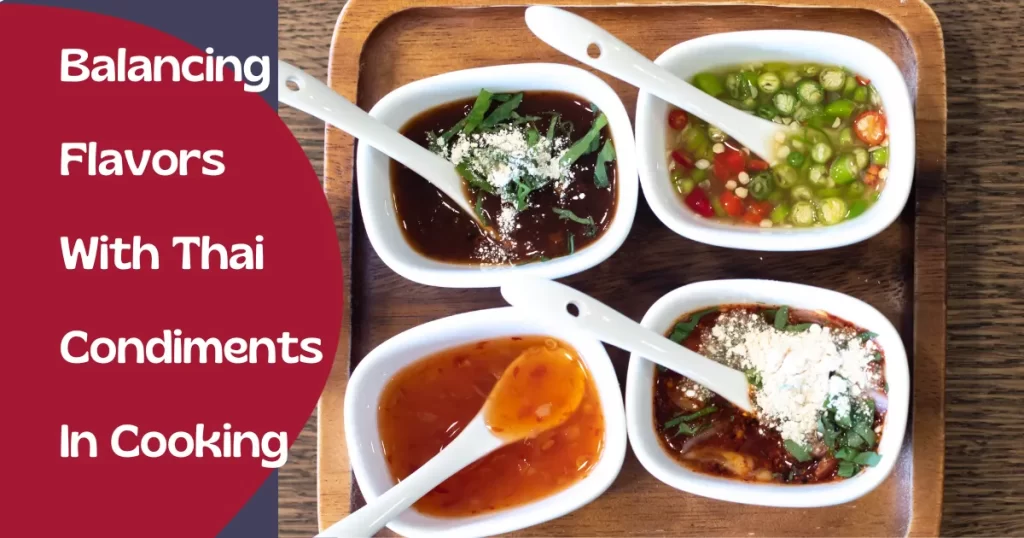
The use of condiments in Thai cuisine is not just about adding flavor but is also about creating a balance of sweet, sour, salty, and spicy tastes.
Spicy & Essential Thai Condiments For Heat Lovers
Fish Sauce
Made from fermented fish, this salty and savory sauce is a staple in many Thai dishes. While some may be put off by its pungent smell, it's an umami powerhouse.
- ✓ Rich in protein, vitamins & minerals
- ✓ Contains essential amino acids for muscle growth & repair
- ✓ Great addition to a balanced diet
Shrimp Paste
(Kapi) - Made from fermented ground shrimp, commonly used in curries and stir-fries. Less known than fish sauce, but equally essential in Thai cooking.
- ✓ Good source of iron – essential for red blood cell production
- ✓ Contains antioxidants that boost immune system
- ✓ Helps protect against diseases
Chili Peppers
A staple in Thai cuisine, used as chili paste or flakes. These fiery condiments add heat and depth to any dish.
- ✓ Capsaicin: Anti-inflammatory & pain-relieving properties
- ✓ Boosts metabolism & aids weight loss
- ✓ Rich in vitamin C for a strong immune system
Lemongrass
Used as a paste or flavoring, this herb adds a refreshing citrusy note to dishes. Aromatic and versatile.
- ✓ Rich in antioxidants & anti-inflammatory properties
- ✓ Beneficial for arthritis and joint conditions
- ✓ Antibacterial & antifungal – fights infections
⚖️ THE FLAVOR BALANCE OF THAI CUISINE
Sweet · Sour · Salty · Spicy — The harmonious quartet achieved through traditional condiments
สมดุล
Sweet
- Palm Sugar
- Coconut Milk
- Sweet Chili Sauce
Sour
- Tamarind Paste
- Lime Juice
- Lemongrass
Salty
- Fish Sauce
- Shrimp Paste (Kapi)
- Soy Sauce
Spicy
- Bird's Eye Chili
- Sriracha
- Chili Flakes (Prik Bon)
Unique & Specialty Condiments in Thai cooking
Shrimp Paste Chili Oil
One of the most unique and lesser-known condiments, made by frying shrimp paste, chili peppers, and garlic in oil until fragrant, then blended into a smooth paste.
- • Flavor explosion: Salty shrimp paste + spicy chilies + aromatic garlic
- • Often served as a dipping sauce for grilled meats
- • Used as a condiment for noodle dishes
- • Rich, complex, and deeply savory
Nam Prik Kapi น้ำพริกกะปิ
A classic Thai dipping sauce made from a combination of shrimp paste, chili peppers, garlic, and lime juice. Commonly served with fresh vegetables and meats.
- • Probiotic-rich: Contains beneficial bacteria for gut health
- • Vitamin B12: Important for red blood cells & nervous system
- • Strong, pungent flavor cherished by Thai cuisine lovers
- • Traditionally served with raw or blanched vegetables
Tamarind Paste
A tangy and slightly sweet paste made from the pulp of the tamarind fruit. Used in many dishes, particularly soups, curries, and the iconic Pad Thai.
- • Adds signature tangy flavor to Pad Thai
- • Often used in place of lime juice for a fruity sourness
- • Essential in soups (like Tom Yum) and curries
- • Balances sweet, salty, and spicy elements
✨ These specialty condiments represent the depth and complexity of Thai cuisine — each one tells a story of tradition, balance, and bold flavor.
Historical significance of condiments in Thai cooking
Condiments have been an integral part of Thai cuisine for centuries, with their origins dating back to the ancient times of the Sukhothai Kingdom. During this period, the use of spices and herbs in cooking was prevalent, and it was believed that these ingredients not only added flavor but also had medicinal properties. As trade routes opened up, the influence of neighboring countries such as China and India brought in new spices and herbs, further enriching the Thai cuisine.
Trade influences on Thai condiment diversity
The use of chili peppers in Thai cuisine can be attributed to the influence of Portuguese traders who introduced them to the country in the 16th century. Today, chili peppers are a staple in Thai cooking, and they add a fiery kick to dishes, making them a favorite among spice lovers.
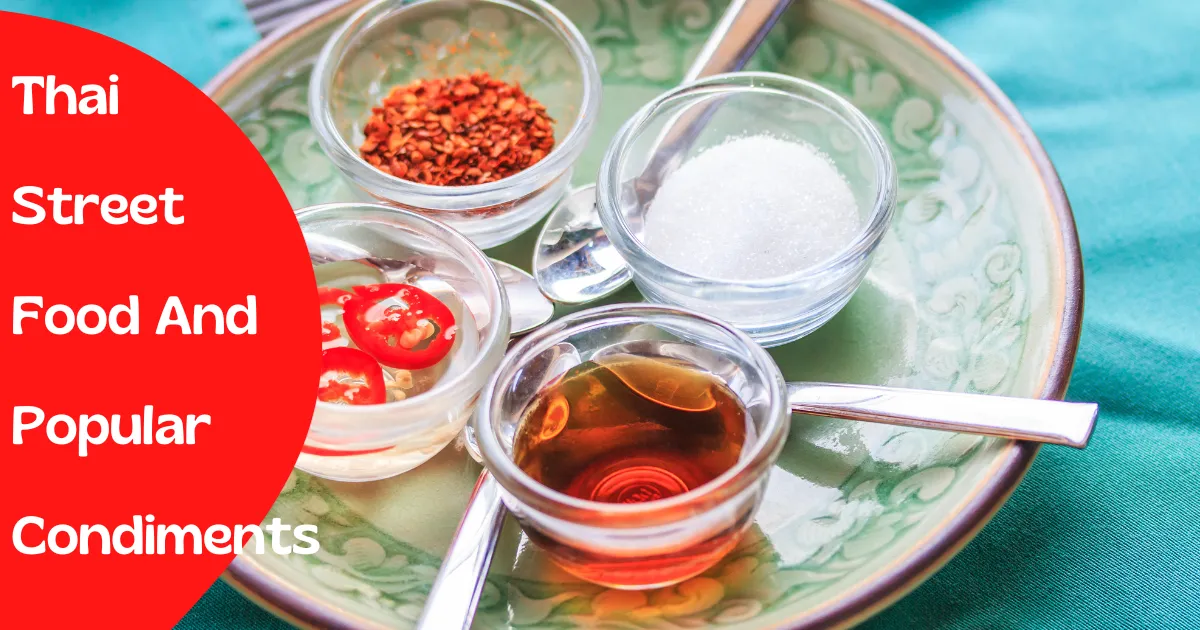
In addition to adding flavor to dishes, condiments in Thai cuisine also hold cultural significance. In Thai culture, food is not just about sustenance but also about bringing people together and fostering a sense of community. Condiments are often served on the side, allowing diners to customize their dishes according to their taste preferences. This communal way of dining is deeply ingrained in Thai culture and is a reflection of the country’s warm and welcoming nature.
Conclusion
In conclusion, the use of condiments in Thai cuisine is not just about adding flavor but also about preserving cultural traditions and bringing people together. From fish sauce to chili peppers, each condiment has a unique history and cultural significance that adds to the richness of Thai cuisine. So the next time you enjoy a delicious Thai dish, remember the secrets behind the condiments that make it truly special.
So the next time you enjoy a delicious Thai meal, remember to savor the flavors and the health benefits that come with it.



💬 Join the conversation