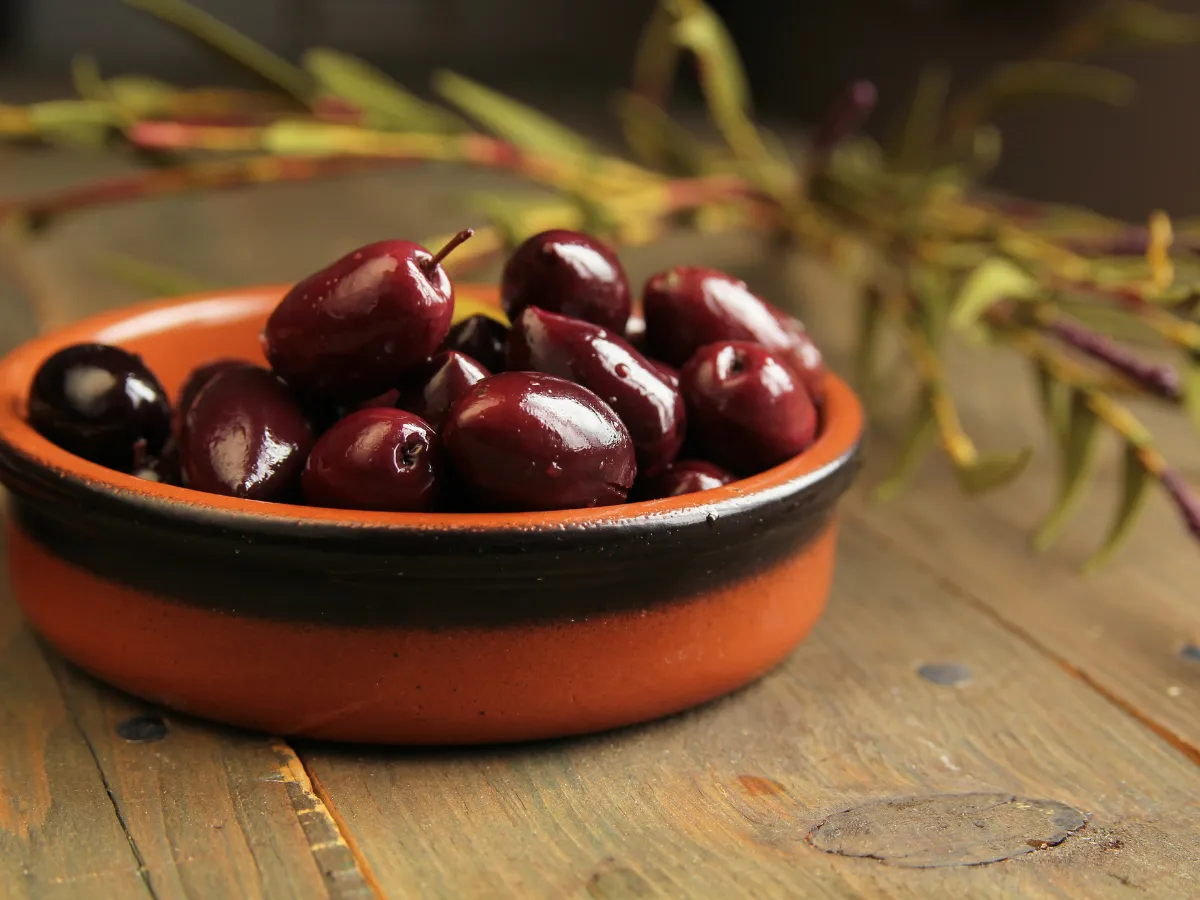
Black Olives Calories – Black olives are more than just a flavorful addition to salads, pizzas, and Mediterranean dishes—they’re also a nutrient-packed snack with a unique calorie profile. Understanding the calories in black olives helps you enjoy their rich, savory taste while keeping your diet balanced.
These small fruits provide healthy fats, antioxidants, and a touch of fiber, making them a wise choice for heart health and satiety when eaten in moderation. Whether you’re watching your calorie intake or exploring healthy snacks, black olives deserve a closer look.
Health Benefits of Black Olives
Do Black Olives Have the Same Antioxidants as Olive Oil?
Black olives and olive oil share many antioxidant compounds—most notably polyphenols like oleuropein, hydroxytyrosol, and tyrosol—because both come from the same fruit. These antioxidants help combat oxidative stress, lower inflammation, and protect cardiovascular health.
- However, their concentration varies: extra-virgin olive oil contains a higher, more concentrated amount of these compounds per serving, as it is extracted from large quantities of olives without dilution. Black olives still provide valuable antioxidants, especially when consumed whole, since they also offer fiber and other plant compounds not found in the oil alone. Eating both—whole olives and olive oil—ensures you benefit from the full nutritional spectrum.
Are Black Olives Healthier than Green Olives?
Whether black or green olives are “healthier” depends on what you’re looking for nutritionally. Black olives tend to have slightly more healthy fats and are often softer and milder in flavor. They are also somewhat higher in iron due to the longer ripening process.
- Green olives, harvested earlier, typically contain more sodium (because of curing methods) and slightly fewer calories per serving. Both are rich in monounsaturated fats, vitamin E, and antioxidants. From a health perspective, variety is best—eating both provides a broader range of flavor, texture, and nutrient profiles, while keeping an eye on sodium levels.
Cultural Significance: Olives in Greek Tradition
In Greek culinary tradition, black olives are more than a food—they are a symbol of hospitality, abundance, and the Mediterranean way of life. They are often served at the start of a meal alongside bread, cheese, and wine, representing a warm welcome.
- Many Greek villages have age-old curing methods that have been passed down for generations, giving each region’s olives a unique taste profile. Black olives are integral in dishes like Horiatiki (Greek salad), traditional breads, and meze platters. They also carry spiritual and historical meaning—olive trees were sacred in ancient Greece, associated with Athena, the goddess of wisdom, and considered a gift of peace and prosperity.
Global Black Olive Varieties
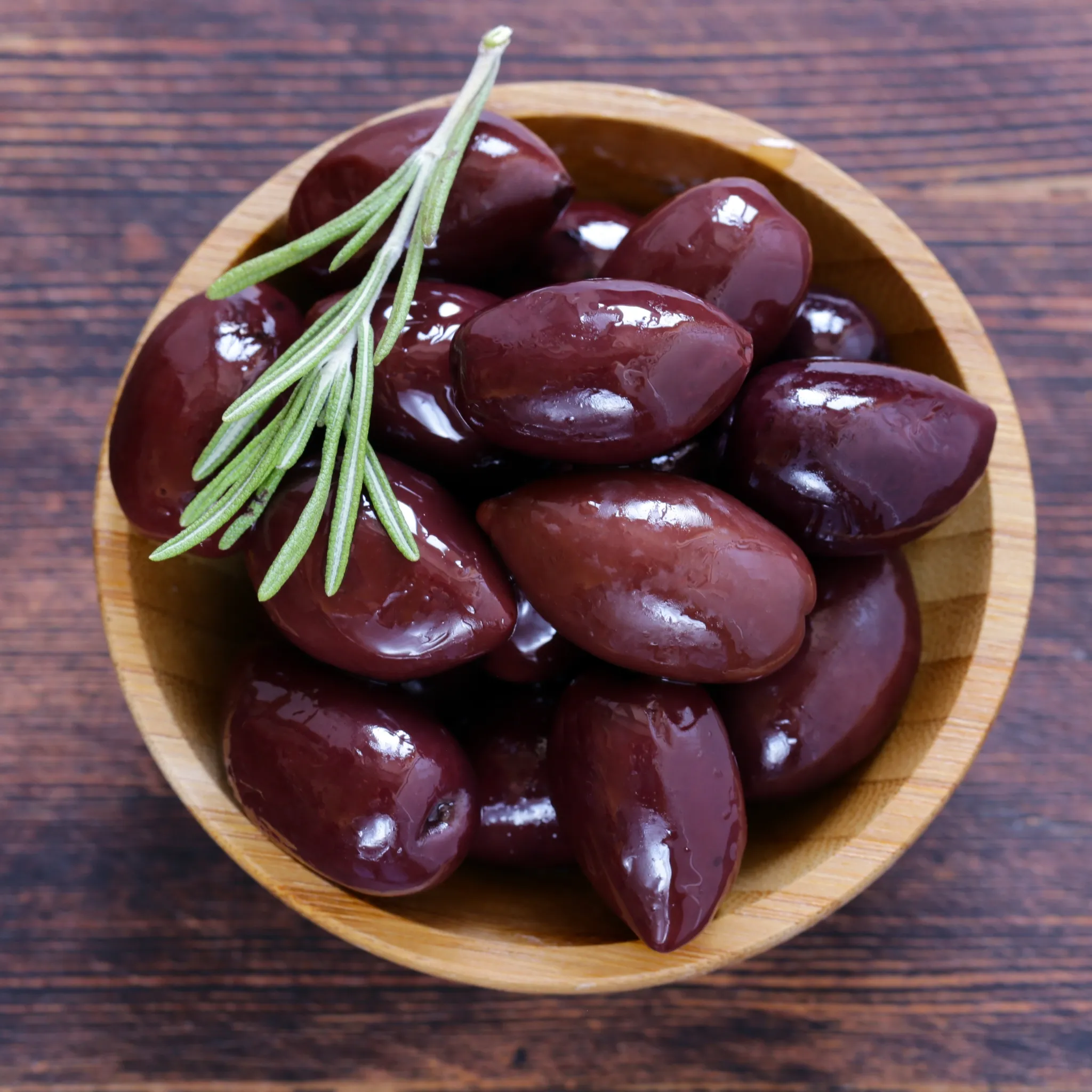
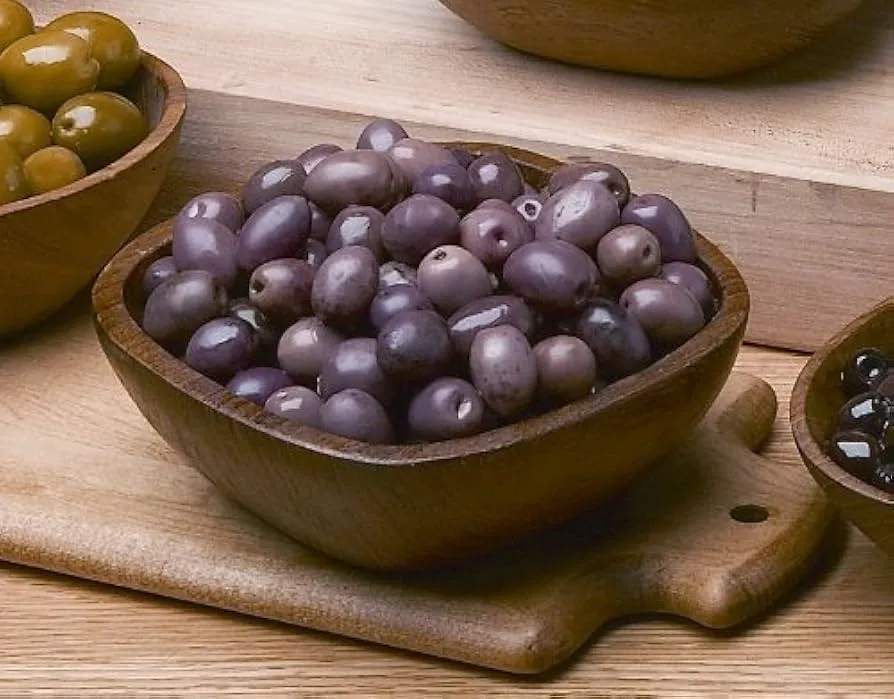
Kalamata
Almond-shaped and dark purple-brown, these naturally ripened olives are cured in brine or red wine vinegar. They are famous for their rich, fruity, and robust briny flavor.
- High in **Monounsaturated Fats** (heart-healthy).
- Rich in **Hydroxytyrosol** (potent antioxidant).
- Good source of **Iron** and **Vitamin A**.
- Cured versions are high in **Sodium**.
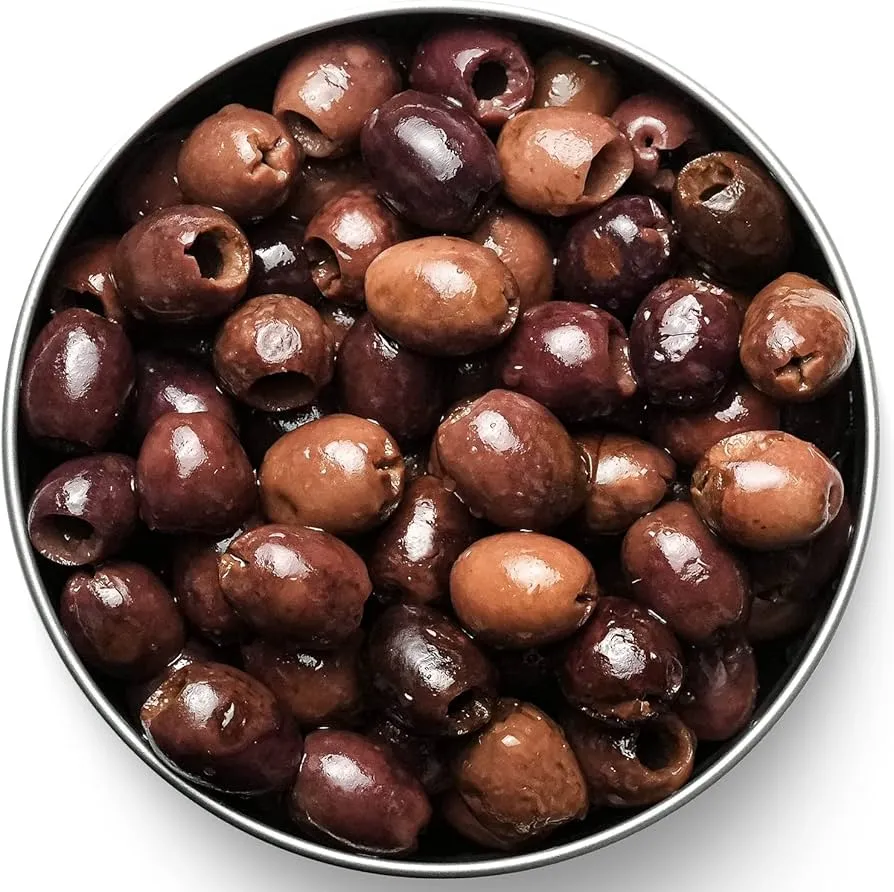
Niçoise
Small, purplish-black, and intensely flavorful. These are naturally ripened and cured, often packed in olive oil, providing a nutty, complex, and slightly herbaceous taste.
- Concentrated source of **Healthy Fats**.
- Contains protective **Polyphenols**.
- Rich in **Vitamin E** for skin/immune health.
- Often have moderate **Sodium** levels.
Gaeta
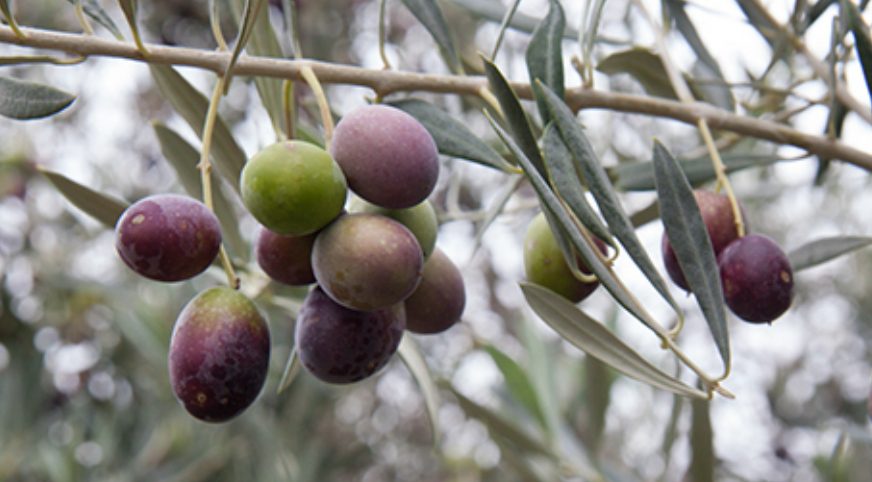
Small, deep black or dark purple, and slightly bitter. These are cured in brine or oil and are prized for their firm texture and complex, robust, and salty flavor profile.
- High in **Oleic Acid** (Monounsaturated Fat).
- Source of **Antioxidant** Carotenoids.
- Provides **Vitamin A** for eye health.
- Strong brining means significant **Sodium** content.
Hojiblanca
A versatile Spanish olive that turns black when fully ripe. Used for both oil and table olives, it offers a milder, firm-fleshed, and somewhat peppery flavor.
- Excellent balance of **Healthy Fatty Acids**.
- Source of **Tocopherols** (Vitamin E variants).
- Provides moderate **Fiber** for digestion.
- Cured types vary in **Sodium** content.

Canned Black Olives
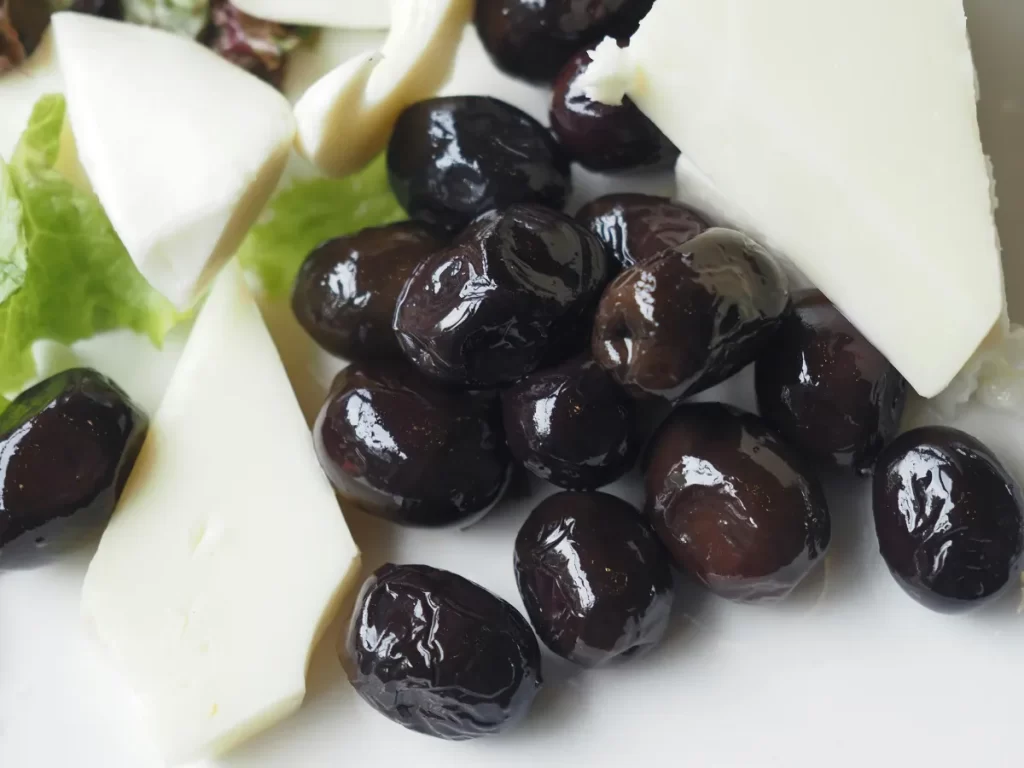
Picked green and processed (oxidized) to turn uniformly black. They are cured in brine, resulting in a firm, smooth texture and a consistently mild, subtle flavor.
- Retain beneficial **Monounsaturated Fats**.
- Antioxidant content is lower due to processing.
- Good source of **Iron** and **Vitamin E**.
- Processing involves significant **Sodium** levels.
Black Olives: Your Nutrition & Culinary Guide (Q&A)
| Question | Detailed Answer |
|---|---|
| Health benefits of black olives? | Black olives are a nutritional powerhouse! They are rich in monounsaturated fats (oleic acid) for heart health and antioxidants (polyphenols, Vitamin E) that combat free radicals. They also provide fiber, iron, and Vitamin A. |
| Good for heart health? | Yes! Monounsaturated fats help lower "bad" LDL cholesterol while increasing "good" HDL. Their antioxidants prevent cholesterol oxidation, reducing plaque buildup in arteries. |
| Nutrition Facts (Serving: 5 olives) |
|
| How to use in cooking? |
They add a savory, briny punch to:
|
| Difference between Green and Black? | Green olives are picked unripe; they are firmer and more bitter. Black olives are picked when fully ripe (or processed to be so), resulting in a softer texture and fruitier flavor. |
| Are canned olives dyed? | Typically not dyed. Most canned "ripe" olives are green olives treated with lye and oxygen to turn them black uniformly. Naturally black olives (like Kalamata) ripen on the tree to get their color. |
| How to store once opened? | Transfer to an airtight container with their brine and refrigerate. They typically last for a few weeks to two months. Dry-cured olives can be stored in olive oil for longer shelf life. |
Black Olives: Nutrition at a Glance
Per serving — 5 large olives (approx. 22g)
❤️ KEY HEALTH BENEFITS
Olive Tourism: Where to Experience Black Olives
Travel the Mediterranean through olive culture:
Greece (Kalamata): Visit the region famous for Kalamata olives – take tours of centuries-old olive groves
Italy (Sicily & Tuscany): Olive oil tastings and farm stays during harvest season (October-December)
Spain (Andalusia): Visit the world’s largest olive-producing region – try Manzanilla and Hojiblanca varieties
France (Provence): Niçoise olives and olive oil from small, family-owned mills
Morocco: Explore traditional olive curing methods in the markets of Marrakech
California: Olive harvest tours in Napa and Sonoma valleys
Each destination offers unique olive varieties, curing traditions, and tasting experiences.
Join the Conversation